
Ritucharya (Seasonal)
Ritucharya: Navigating Rajasthan's Seasonal Shifts with Ayurvedic Diet & Care
Oct 11, 2026
•
8 Mins Read
•
Vaidya Editorial Desk
•
Authentic Kerala Ayurveda
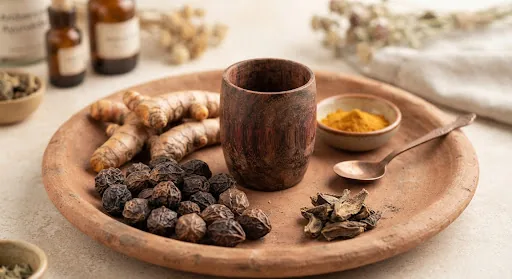
Clinical guidance on adapting diet, hydration, and seasonal Panchakarma to Rajasthan’s extreme climatic contrasts between scorching summers and dry winters.
Rajasthan’s arid and semi-arid terrain presents distinct environmental challenges for human physiology. With summer temperatures regularly climbing above 45°C during *Grishma Ritu* (May–June) and dry, piercing cold winds descending during *Shishira Ritu* (December–January), maintaining biological equilibrium requires conscious, season-specific lifestyle adaptations known in Ayurveda as **Ritucharya**.
* **Dietary Directives (Ahara):** Favor cooling, sweet, light, and naturally unctuous foods. Incorporate sweet pomegranate, soaked black raisins, sweet lassi with roasted cumin and mint, fresh coconut water, and cucumber. Strictly limit deep-fried snacks, excessive red chillies, vinegar, and fermented pickles.
* **Herbal Formulations:** Usheerasava, Chandanasava, and pure Shatavari Ghrita soothe gastric acidity and internal heat sensation (*Daha*).
* **Lifestyle (Vihara):** Avoid intense midday sun exposure. Take evening strolls near water bodies or fragrant gardens. Cool foot-baths with vetiver (Khus) before sleep pacify night sweats and restlessness.
* **Dietary Directives:** Drink only boiled and cooled water. Eat warm, freshly prepared meals seasoned with warming digestive spices like ginger, black pepper, and hing (asafoetida). Avoid heavy raw salads and stale food.
* **Clinical Cleansing:** Varsha is the classical, universally recommended season for **Basti Karma** (medicated herbal enemas) to prevent arthritic disorders, sciatica, and digestive sluggishness.
* **Dietary Directives:** The body can digest heavier, richer, and deeply nourishing foods. Savor warm milk infused with saffron and almonds, preparations made with sesame and jaggery (*Til-Gud*), Amla Murabba, and pure A2 cow ghee.
* **Panchakarma Care:** Full-body warm oil Abhyanga followed by herbal steam (Swedana) prevents dry, scaly skin, back stiffness, and joint crepitus.
Navigating Grishma Ritu (The Scorching Summer Months)
During the intense dry heat of Rajasthan's summers, the blazing sun extracts bodily moisture (Snigdhata) and Kapha, leading to a marked depletion of physical stamina (*Bala*) and an aggravation of sharp Pitta dosha.* **Dietary Directives (Ahara):** Favor cooling, sweet, light, and naturally unctuous foods. Incorporate sweet pomegranate, soaked black raisins, sweet lassi with roasted cumin and mint, fresh coconut water, and cucumber. Strictly limit deep-fried snacks, excessive red chillies, vinegar, and fermented pickles.
* **Herbal Formulations:** Usheerasava, Chandanasava, and pure Shatavari Ghrita soothe gastric acidity and internal heat sensation (*Daha*).
* **Lifestyle (Vihara):** Avoid intense midday sun exposure. Take evening strolls near water bodies or fragrant gardens. Cool foot-baths with vetiver (Khus) before sleep pacify night sweats and restlessness.
Navigating Varsha Ritu (The Monsoon Transition)
When monsoon rains arrive in July and August, atmospheric humidity rises while the ambient earth releases acidic vapors (*Amla Vipaka*). The digestive fire (*Agni*) reaches its lowest annual ebb, creating ideal conditions for Vata aggravation and joint flare-ups.* **Dietary Directives:** Drink only boiled and cooled water. Eat warm, freshly prepared meals seasoned with warming digestive spices like ginger, black pepper, and hing (asafoetida). Avoid heavy raw salads and stale food.
* **Clinical Cleansing:** Varsha is the classical, universally recommended season for **Basti Karma** (medicated herbal enemas) to prevent arthritic disorders, sciatica, and digestive sluggishness.
Navigating Shishira & Hemanta (The Crisp Winter Months)
In winter, the external cold causes the pores to constrict, conserving internal heat and dramatically kindling the digestive fire (*Jatharagni*).* **Dietary Directives:** The body can digest heavier, richer, and deeply nourishing foods. Savor warm milk infused with saffron and almonds, preparations made with sesame and jaggery (*Til-Gud*), Amla Murabba, and pure A2 cow ghee.
* **Panchakarma Care:** Full-body warm oil Abhyanga followed by herbal steam (Swedana) prevents dry, scaly skin, back stiffness, and joint crepitus.
Medical Disclaimer
Ayurvedic treatments are designed to support and maintain holistic health. They are not intended to replace emergency medical care. Results may vary depending on individual constitution (Prakriti), condition chronicity, and lifestyle adherence. Please consult our certified Ayurvedic physicians before beginning any treatment regimen.