
Metabolic Health & Diabetes Management
प्रमेह एवं मेदोरोग चिकित्सा (Insulin Receptivity & Metabolic Agni Activation)
Specialized Panchakarma protocols for Type-2 Diabetes (Madhumeha), Insulin Resistance, Dyslipidemia, and Metabolic Syndrome. Activate sluggish tissue Agni, burn visceral fat, and prevent diabetic neuropathy through authentic dry herbal powder scrubs (Udhvarthanam) and classical decoctions.
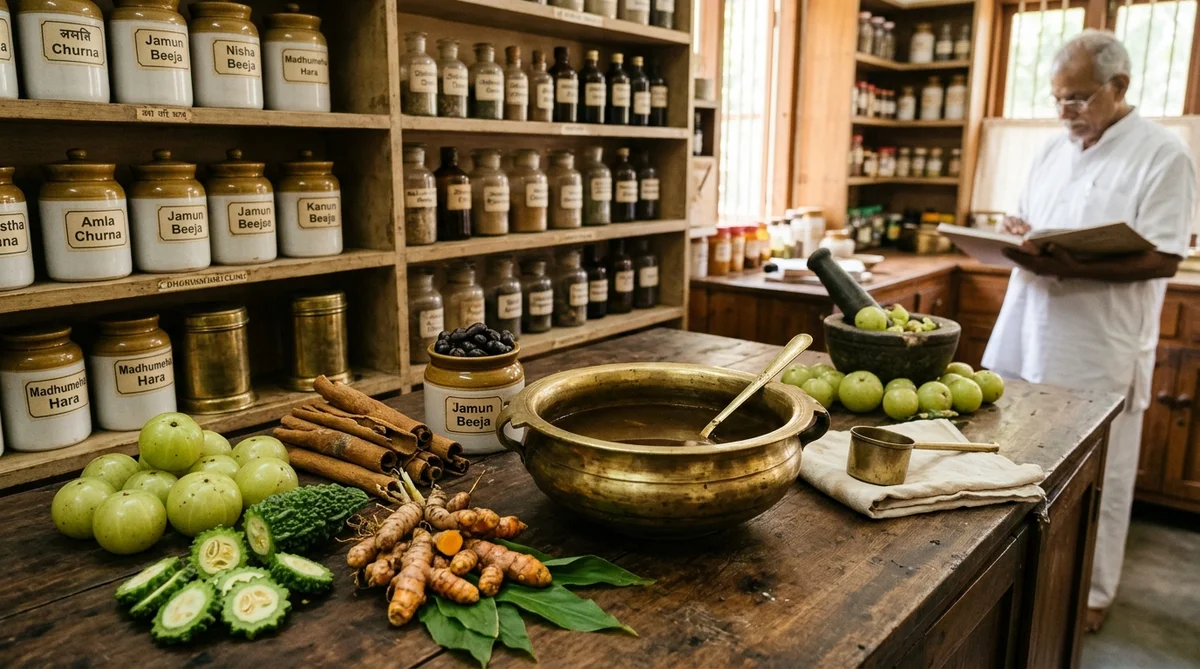
Personalized Panchakarma therapies aimed at deep cellular detoxification and natural tissue recovery.
Protocol Duration
14 to 21 Clinical Days
Centre Availability
Jaipur & Kota Hospitals
Diagnostic Review
Clinical Scans & Nadi Pariksha
Care Supervision
Chief Vaidya Direct OPD
Classical Ayurvedic Understanding & Pathology (Nidana & Samprapti)
Correlating classical Vedic texts with modern clinical diagnostics
Diabetes in Ayurveda is recognized under "Prameha" (प्रमेह), culminating in "Madhumeha" (मधुमेह). It occurs when sluggish metabolic fire (Mandagni) leads to accumulation of immature metabolic waste (Ama), which interacts with aggravated Kapha and Meda (adipose tissue) to block microvascular channels (Medovaha Srotas). Treatment aims to dissolve deep visceral adipose stagnation and stimulate peripheral insulin receptor sensitivity through upward dry herbal friction therapy (Udhvarthanam) using Triphala, Kolakulathadi, and Musta, paired with metabolic sweat therapy (Bashpa Sweda).
Diagnostic imaging and modern medicine recognize this condition through tissue inflammation, structural changes, or metabolic cellular distress.
Ayurveda targets the foundational doshic imbalance, cellular metabolic waste (*Ama*), and channel blockage (*Srotorodha*) to facilitate natural long-term healing.
Recognized Clinical Symptoms & Warning Signs
If you experience two or more of these symptoms, early clinical evaluation is essential
Fluctuating fasting and post-prandial blood sugar levels despite oral hypoglycemics
Persistent post-meal drowsiness, heavy lethargy, and lack of physical enthusiasm
Excessive thirst (Polydipsia), dry mouth, and frequent urination (Polyuria) especially at night
Tingling, burning sensation, or numbness in the soles of the feet (Early peripheral neuropathy)
Slow wound healing, recurring skin infections, and metabolic fatigue
Elevated HbA1c, visceral obesity around the waistline, and fatty liver changes
The 3-Phase Non-Surgical Kerala Healing Protocol
A structured, time-tested Panchakarma timeline designed for long-term recovery
Upward vigorous dry powder friction therapy (Udhvarthanam) using Triphala, Musta, and Kolakulathadi mobilizes visceral fat and unclogs lymphatic channels.
Medicated herbal steam (Bashpa Sweda) and metabolic fomentation enhance peripheral microvascular blood flow and insulin receptor sensitivity.
Specialized Kashayam decoctions and neuro-protective oils protect against diabetic neuropathy, nephropathy, and post-prandial blood sugar spikes.
Primary Recommended Therapy Procedures
Clinical Panchakarma procedures administered for Metabolic Health & Diabetes Management
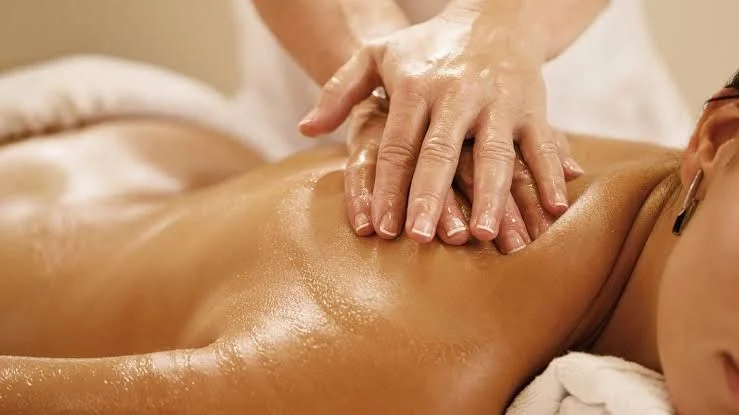
Abhyangam
अभ्यङ्गम् (Synchronized Body Massage)
60 Mins • 3 to 7 Sessions
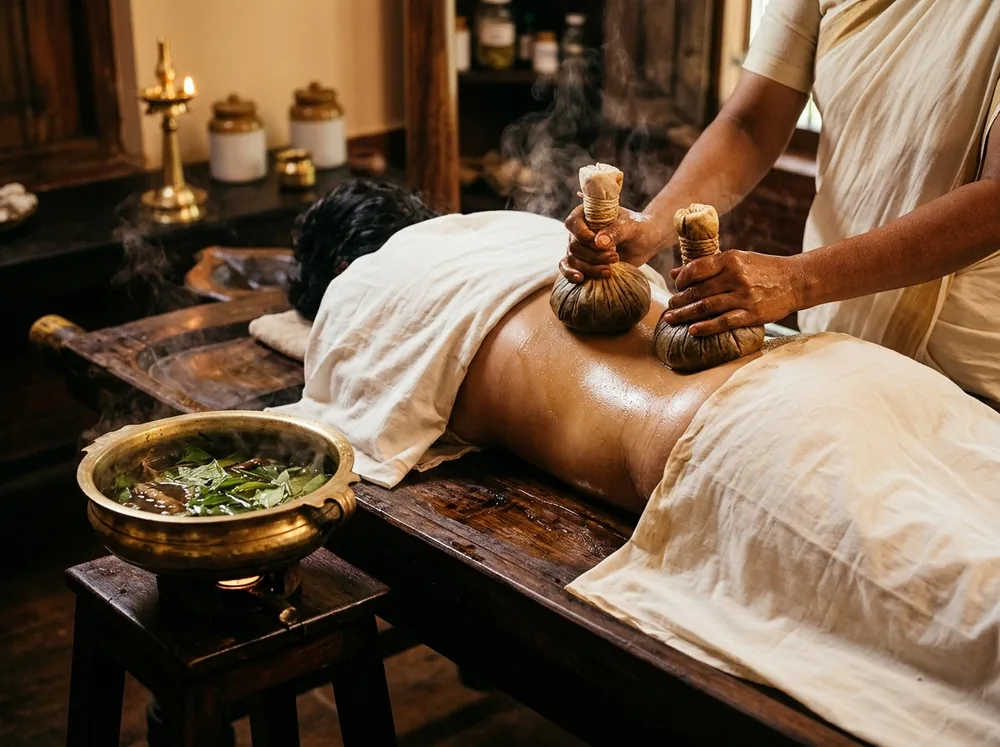
Podikizhi (Churna Pinda Sweda)
चूर्णपिण्ड स्वेद (Medicinal Herbal Powder Bolus)
50 Mins • 7 to 14 Sessions
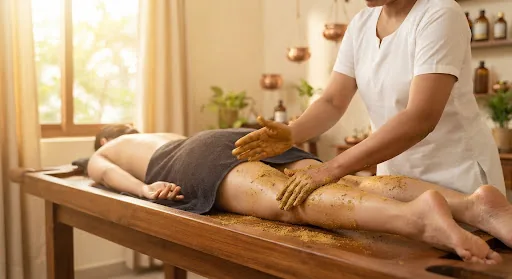
Udhvarthanam
उद्वर्तनम् (Herbal Dry Powder Exfoliation)
45 Mins • 7 to 14 Sessions
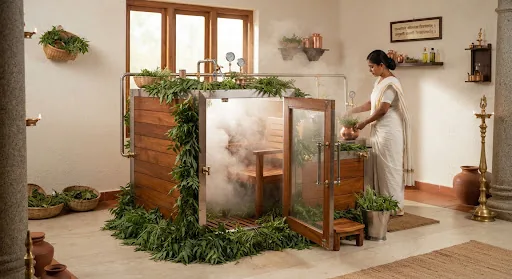
Steam Bath (Bashpa Sweda)
बाष्प स्वेद (Herbal Chamber Sudation)
20 Mins • Complementary post-Abhyangam
Diet & Daily Living Guidelines (Pathya & Apathya)
Essential daily practices to accelerate recovery and maintain wellness
- Barley (Yava), roasted grams, bitter gourd, and methi seeds
- Amla juice with a pinch of turmeric powder in the morning
- Daily 40 minutes of brisk walking and active lifestyle
- Early dinner by 7:30 PM with light mung soup
- Direct white sugar, sweets, sugarcane juice, and jaggery
- Polished white rice, potatoes, and deep fried snacks
- Daytime sleeping (Diwaswapna) which sharply raises blood sugar
- Sedentary habits and lack of physical sweat exertion
Frequently Asked Questions regarding Metabolic Health & Diabetes Management
Clinical clarifications by our Senior Ayurvedic Consultants
Can Ayurveda help reduce HbA1c and prevent diabetic neuropathy?
Yes. Panchakarma cleanses metabolic stagnation and restores tissue Agni, lowering HbA1c naturally while neuro-protective herbs protect optic nerves and peripheral limb sensation.
Can Ayurvedic treatment be taken alongside existing diabetes medicines?
Yes. Our Vaidyas carefully coordinate Ayurvedic therapies alongside your current prescription, adjusting dosages safely as blood sugar levels improve.
Do I need to bring my latest medical reports or blood tests to the hospital?
Yes. Please bring all previous diagnostic reports, scans, and prescriptions. Our Vaidyas correlate modern laboratory findings with classical pulse diagnosis (*Nadi Pariksha*) to formulate your customized therapy protocol.
Can Ayurvedic Panchakarma treatments be claimed under Health Insurance?
Yes, under modern IRDAI guidelines, AYUSH treatments (Ayurvedic IPD admissions) are eligible for reimbursement under comprehensive health insurance policies. Our administrative desk provides all necessary medical discharge summaries and bills.
Consult Specialist Vaidya
Senior Kerala Ayurvedic Physician
Experience authentic Nadi Pariksha pulse examination and customized Kerala Panchakarma therapies designed for Metabolic Health & Diabetes Management.
Instant Callback Request
Our care desk will call you within 30 minutes
Hospital Locations
Jaipur Flagship Hospital
Mansarovar & Vaishali Nagar, Jaipur, Rajasthan
OPD: 8:00 AM – 8:00 PM (Daily)
Kota Wellness Centre
Talwandi, Kota, Rajasthan
OPD: 8:00 AM – 8:00 PM (Daily)