
Joint Mobility & Osteoarthritis Care
संधिगत वात एवं आमवात चिकित्सा (Non-Surgical Cartilage Repair & Synovial Restoration)
Comprehensive non-surgical Kerala Panchakarma protocol for Knee Osteoarthritis (Sandhigata Vata), Rheumatoid Arthritis (Amavata), Cervical Spondylosis, and Frozen Shoulder. Avoid joint replacement surgery through targeted Janu Basti warm herbal pooling, fresh leaf poultice fomentation (Elakizhi), and natural cartilage lubrication.
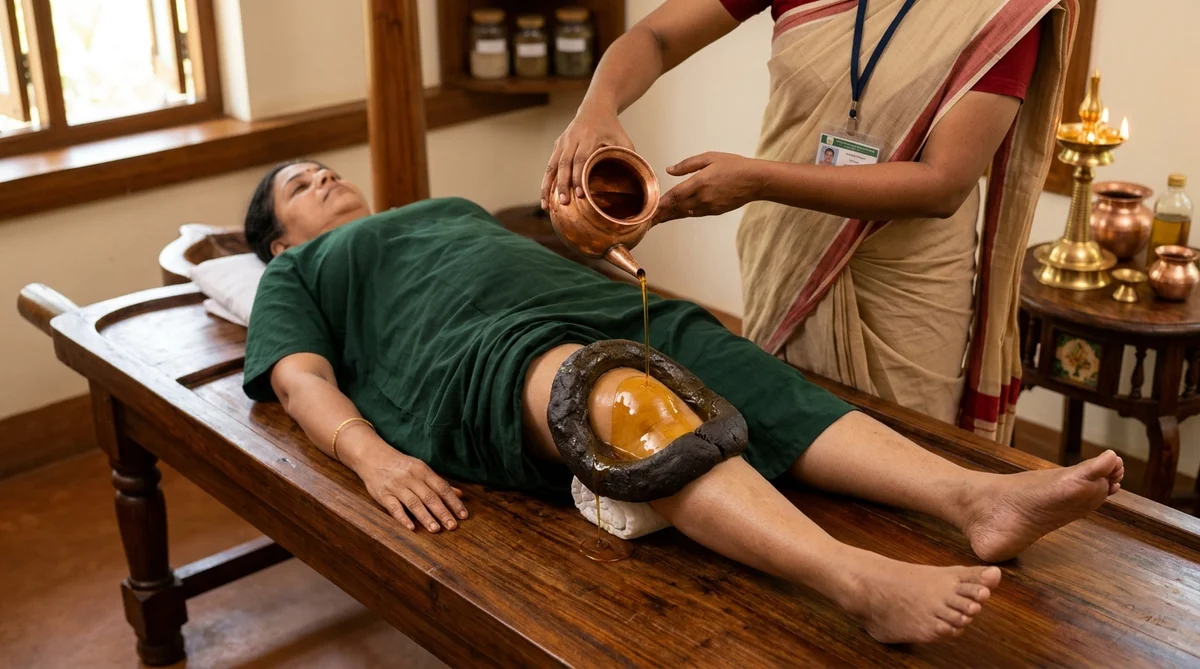
Personalized Panchakarma therapies aimed at deep cellular detoxification and natural tissue recovery.
Protocol Duration
14 to 21 Clinical Days
Centre Availability
Jaipur & Kota Hospitals
Diagnostic Review
Clinical Scans & Nadi Pariksha
Care Supervision
Chief Vaidya Direct OPD
Classical Ayurvedic Understanding & Pathology (Nidana & Samprapti)
Correlating classical Vedic texts with modern clinical diagnostics
Osteoarthritis is classical Ayurveda is known as "Sandhigata Vata" (संधिगत वात). As aging, metabolic toxins (Ama), or wear-and-tear deplete the natural protective unctuousness (Sleshaka Kapha) within the synovial joint capsule, aggravated Vata dosha causes progressive drying, friction, and erosion of the articular cartilage (Asthi Dhatukshaya). Janu Basti creates a continuous hydrostatic reservoir of warm, medicated lipophilic oils (such as Sahacharadi Kuzhambu, Ksheerabala 101, and Mahanarayana Thailam) directly around the knee joint. These bio-active herbal lipids permeate deep into the synovial membrane, stimulating chondrocyte nutrition, relieving painful bone-on-bone friction, and restoring joint flexibility without prosthetic surgery.
Diagnostic imaging and modern medicine recognize this condition through tissue inflammation, structural changes, or metabolic cellular distress.
Ayurveda targets the foundational doshic imbalance, cellular metabolic waste (*Ama*), and channel blockage (*Srotorodha*) to facilitate natural long-term healing.
Recognized Clinical Symptoms & Warning Signs
If you experience two or more of these symptoms, early clinical evaluation is essential
Severe morning joint stiffness and difficulty straightening or bending knees upon waking
Crepitus (cracking or grinding sounds) while walking, climbing stairs, or squatting
Persistent dull or throbbing aching pain aggravated by cold weather or damp monsoons
Localized joint swelling, heat, tenderness, and synovial effusion (fluid buildup)
Progressive loss of joint space on X-ray and reduced knee flexion range of motion
Inability to sit crossed-legged on the floor or walk without supportive hand railing
The 3-Phase Non-Surgical Kerala Healing Protocol
A structured, time-tested Panchakarma timeline designed for long-term recovery
Janu Basti warm oil reservoir combined with herbal powder fomentation (Podikizhi) relieves acute joint stiffness and flushes out inflammatory effusion.
Application of fresh medicinal leaf boluses (Elakizhi) and synchronized Abhyangam with Ksheerabala 101 drives restorative lipids directly into the joint capsule.
Matra Basti (medicated oil enema) coupled with gentle Ayurvedic physiotherapy rebuilds tendon elasticity and halts bone friction.
Primary Recommended Therapy Procedures
Clinical Panchakarma procedures administered for Joint Mobility & Osteoarthritis Care
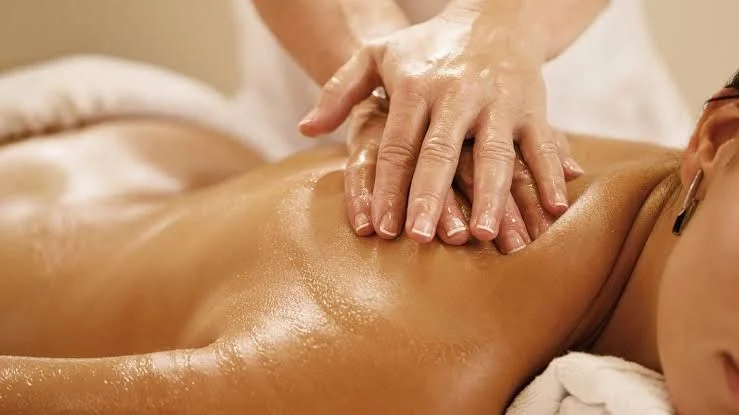
Abhyangam
अभ्यङ्गम् (Synchronized Body Massage)
60 Mins • 3 to 7 Sessions
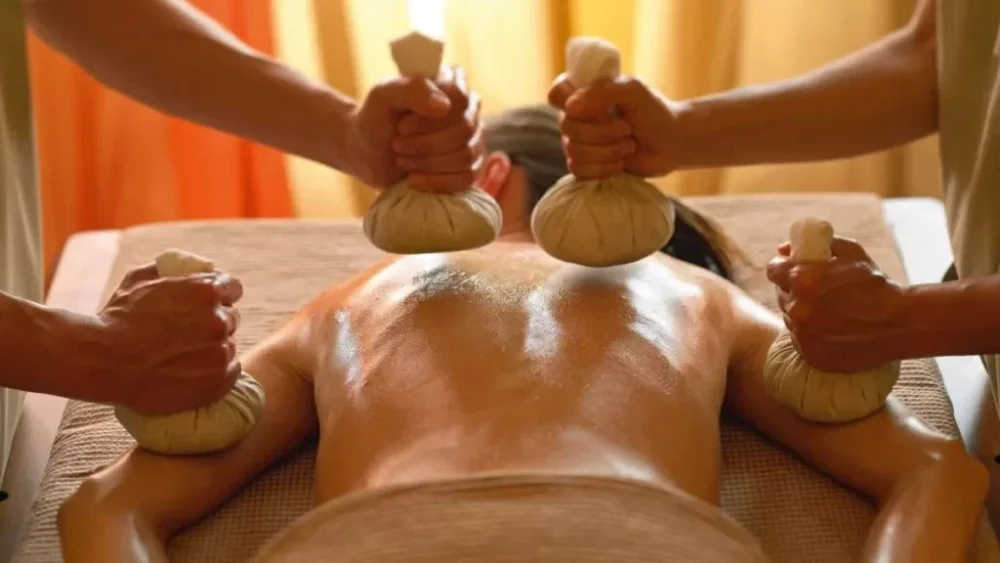
Elakizhi (Patra Pinda Sweda)
पत्रपिण्ड स्वेद (Herbal Leaf Poultice Therapy)
50 Mins • 7 to 14 Days
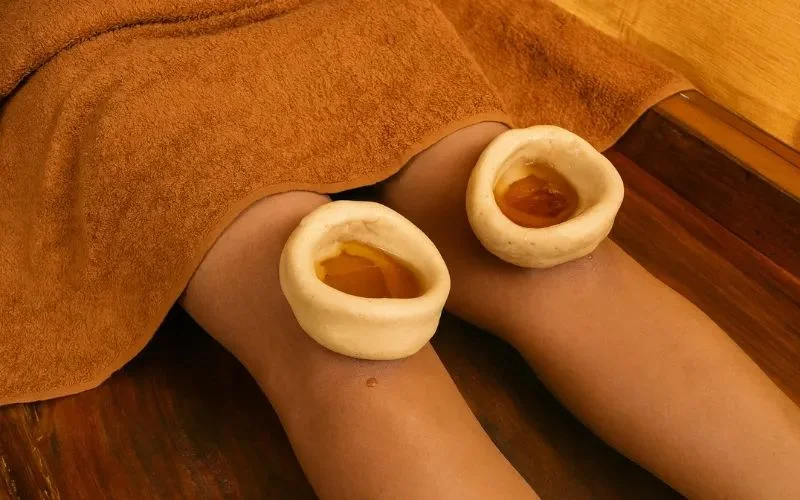
Janu Basti
जानु बस्ति (Knee Joint Preservation)
40 Mins • 7 to 14 Days
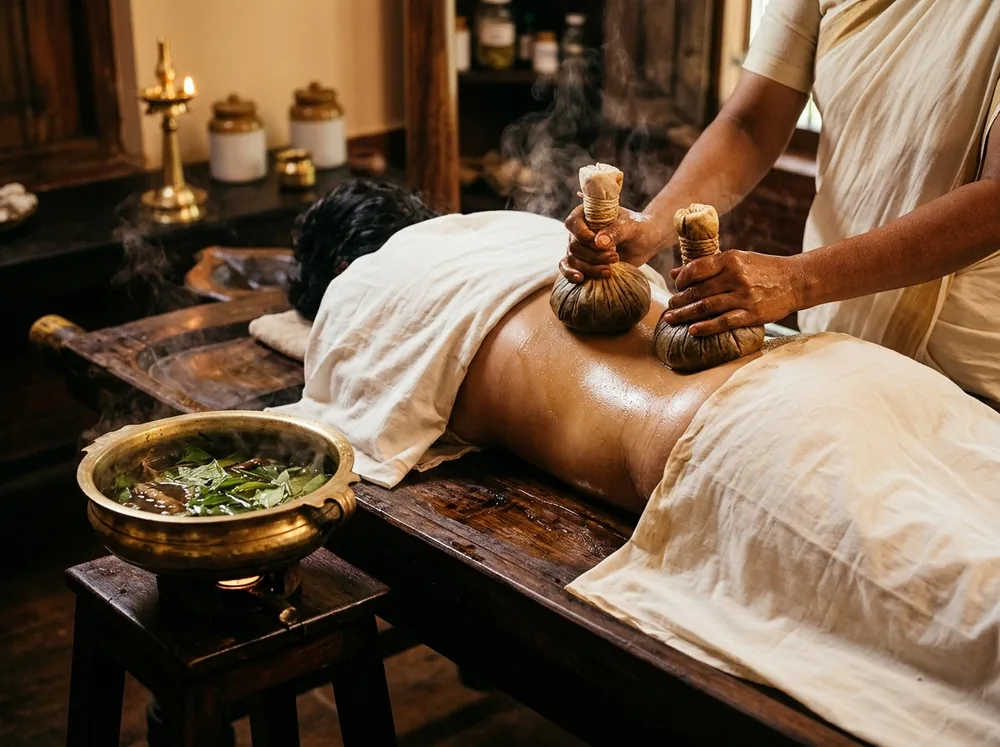
Podikizhi (Churna Pinda Sweda)
चूर्णपिण्ड स्वेद (Medicinal Herbal Powder Bolus)
50 Mins • 7 to 14 Sessions
Diet & Daily Living Guidelines (Pathya & Apathya)
Essential daily practices to accelerate recovery and maintain wellness
- Warm drumstick soup and sesame seed preparations
- Cow ghee and turmeric milk at bedtime
- Low-impact knee flexion exercises
- Keeping joints warm during seasonal changes
- Squatting or sitting cross-legged on hard floors
- Climbing long flights of stairs repeatedly
- Eating cold, sour, curd, and fermented foods
- Weight-bearing impact sports on hard pavements
Frequently Asked Questions regarding Joint Mobility & Osteoarthritis Care
Clinical clarifications by our Senior Ayurvedic Consultants
Can knee replacement surgery be avoided in Grade 2 or 3 Osteoarthritis?
Yes. In Grade 1 to Grade 3 osteoarthritis, Janu Basti and authentic Panchakarma rebuild synovial fluid cushioning, halt cartilage attrition, and restore painless walking without joint replacement.
How soon will knee cracking sounds (crepitus) and stiffness reduce?
Morning stiffness typically resolves within the first week of therapy, while joint lubrication and smooth flexion improve markedly over a 14-day cycle.
Do I need to bring my latest medical reports or blood tests to the hospital?
Yes. Please bring all previous diagnostic reports, scans, and prescriptions. Our Vaidyas correlate modern laboratory findings with classical pulse diagnosis (*Nadi Pariksha*) to formulate your customized therapy protocol.
Can Ayurvedic Panchakarma treatments be claimed under Health Insurance?
Yes, under modern IRDAI guidelines, AYUSH treatments (Ayurvedic IPD admissions) are eligible for reimbursement under comprehensive health insurance policies. Our administrative desk provides all necessary medical discharge summaries and bills.
Consult Specialist Vaidya
Senior Kerala Ayurvedic Physician
Experience authentic Nadi Pariksha pulse examination and customized Kerala Panchakarma therapies designed for Joint Mobility & Osteoarthritis Care.
Instant Callback Request
Our care desk will call you within 30 minutes
Hospital Locations
Jaipur Flagship Hospital
Mansarovar & Vaishali Nagar, Jaipur, Rajasthan
OPD: 8:00 AM – 8:00 PM (Daily)
Kota Wellness Centre
Talwandi, Kota, Rajasthan
OPD: 8:00 AM – 8:00 PM (Daily)